Category Archives: Uncategorized

The magic of community

You could pass through Keshcarrigan, spot the pretty bridge, maybe the quirky beer garden, the thatched roof and well-kept flower beds and not realise how much more there is to the village, how many hidden gems it holds.

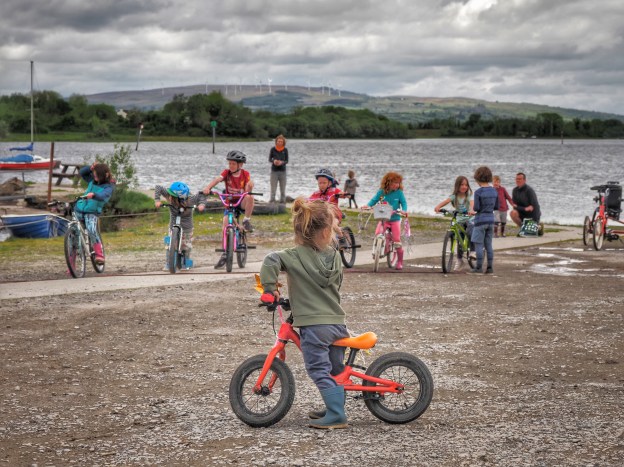
You might not realise it is nestled between two lakes with picnic and swimming spots on the shores of one and a marina for boats and campervans and camping spots on the other. You definitely wouldn’t know that the marina even had the perfect space for our Slow Bicycle Race.

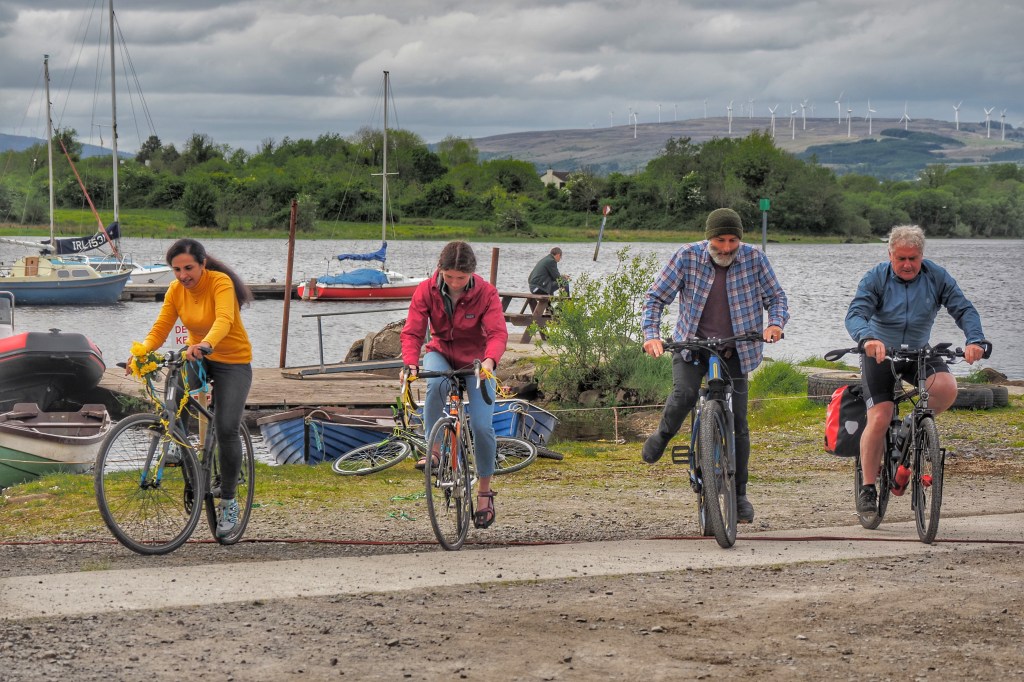
As you passed through you wouldn’t see the colourful beer garden of Tailor McKeons where we feasted on delicious curries and stews and prettied up our bikes ready for the Launch Parade led by the local Kiltubrid Pipe Band.

You might not spot the astropitch, built by the community, fundraised for many years and now fully in their ownership – an amenity for all, especially in the winter when teams come from neighbouring villages to play on the mud-free pitch – and ideal for the ‘AstroKids’ event where locals James and Niall kept the kids enthralled with giant jenga, obstacle courses and penalty shootouts.

You might not spot the Old Barracks with its beautiful crocheted bicycles, another space the community have worked hard to secure as a resource for all. And as part of the festival we were lucky enough to host the first public community event there: a workshop with local author Maria Hoey, a joyful celebration of the magic of poetry and cycling.

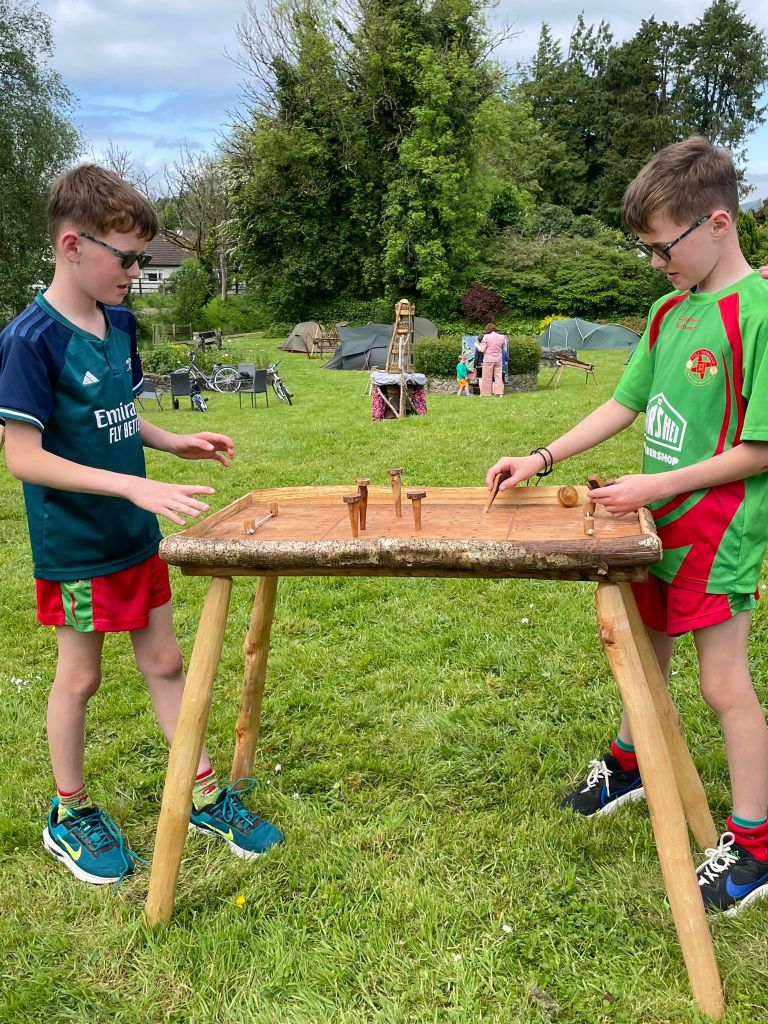
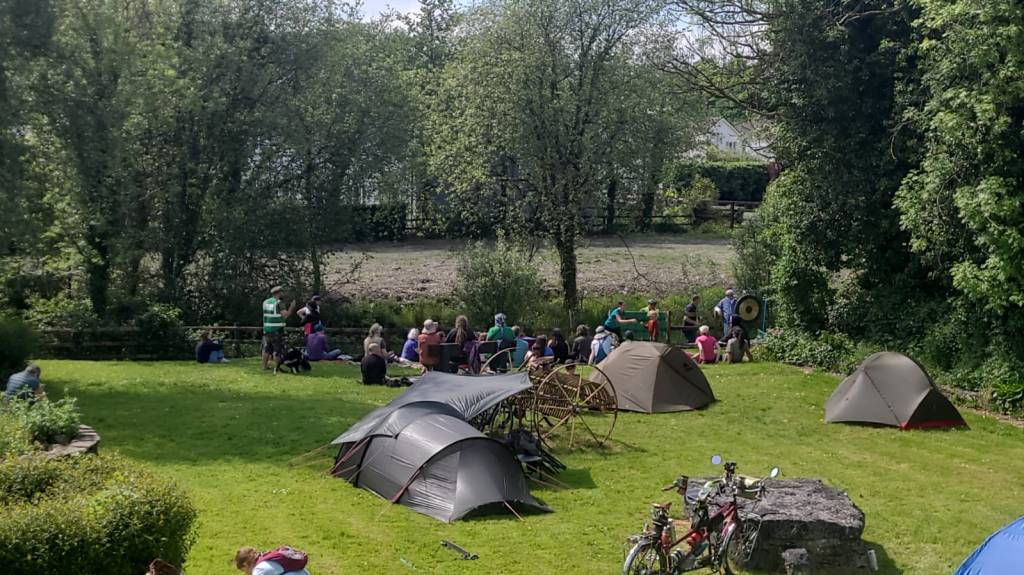
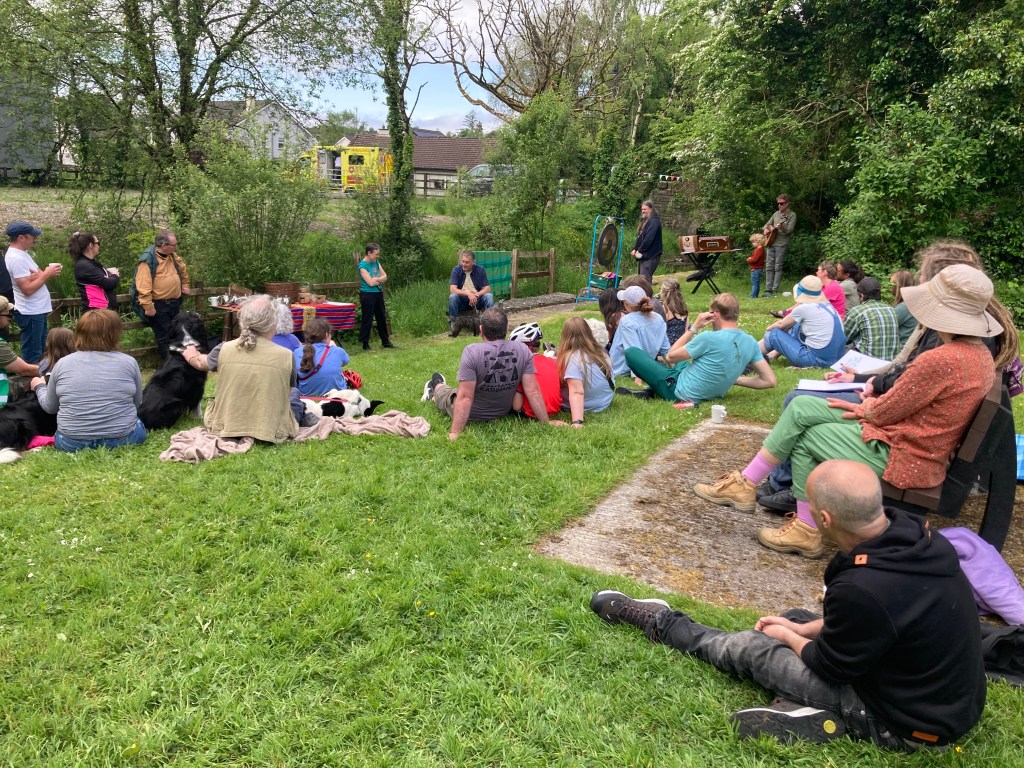
Hidden within the village is also the undulating fairgreen, where Fuinseog Woodland Crafts set up a whole host of their beautifully created Bemusement Games in between the campers, and the ideal stage for Tara Boath Mooney’s Hawthorn Workshop – a bringing together of hawthorn tea, storytelling with local farmer and author Gerry Bohan, hagstones, music, writing and songs.
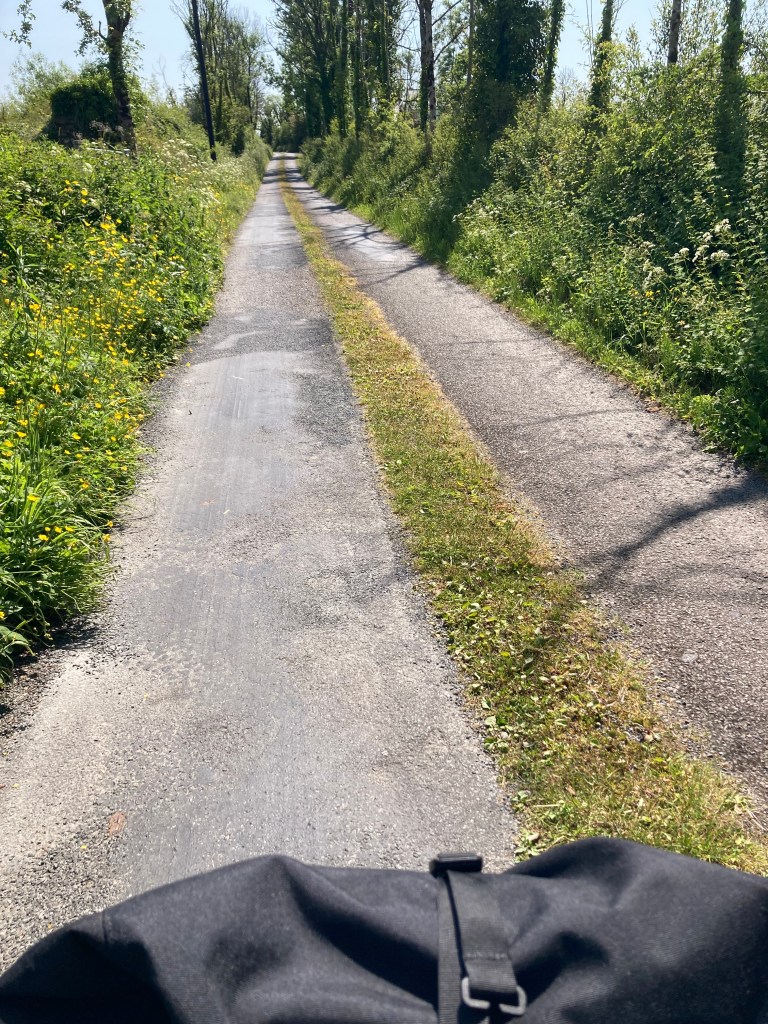
Travelling on the main roads through Keshcarrigan you would definitely not experience the network of blossom-lined ‘rothar roads’ that surround the village taking us up and down hills, past mythical sites, heritage sites and stunning viewing points.
And what you definitely wouldn’t see as you pass through is the community spirit of the village. The generosity of those that live there. The support for each other. Their dedication to making it a place people aspire to live, work and visit.

From the very first meeting we had with Keshcarrigan Development Association in Tailor McKeons, the chair Paddy McGreevey and the rest of the crew arrived with plans and ideas, an unfaltering can-do attitude and copious amounts of tea and biscuits. The perfect mix for getting stuff done. Some, like Jeanette and Lorna have been part of the development association for over 35 years and aren’t done yet.

And that generosity and thoughtfulness never stopped. Even on the Sunday morning of the festival, Paddy woke up in his tent in the fairgreen where he had camped with his nieces and nephews and realized that given the heat we would need a water stop on our cycle. And so he met us at the top of Sheebeg with much-appreciated water and oranges. Paddy even thought of bringing bowls for the panting dogs!

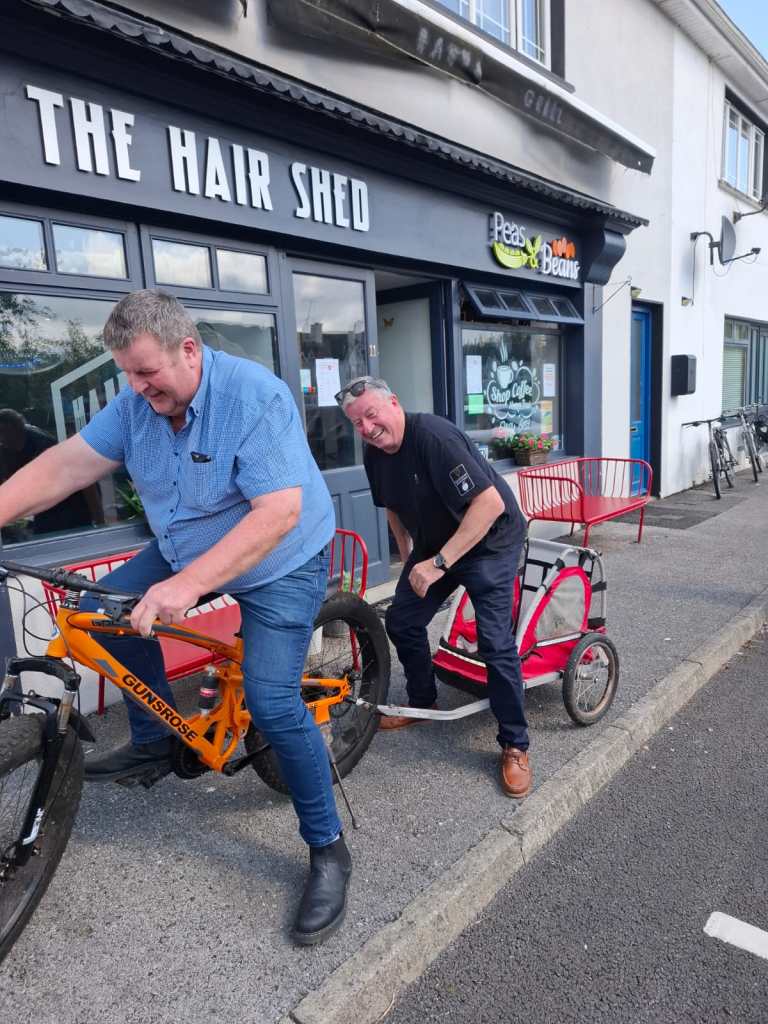
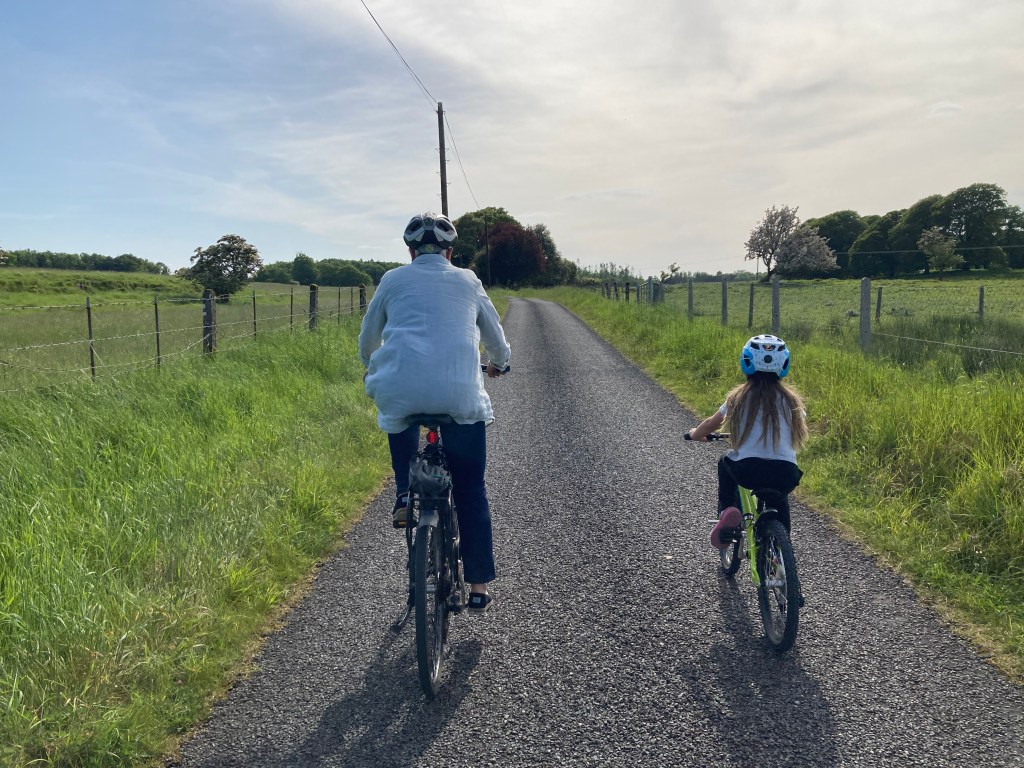
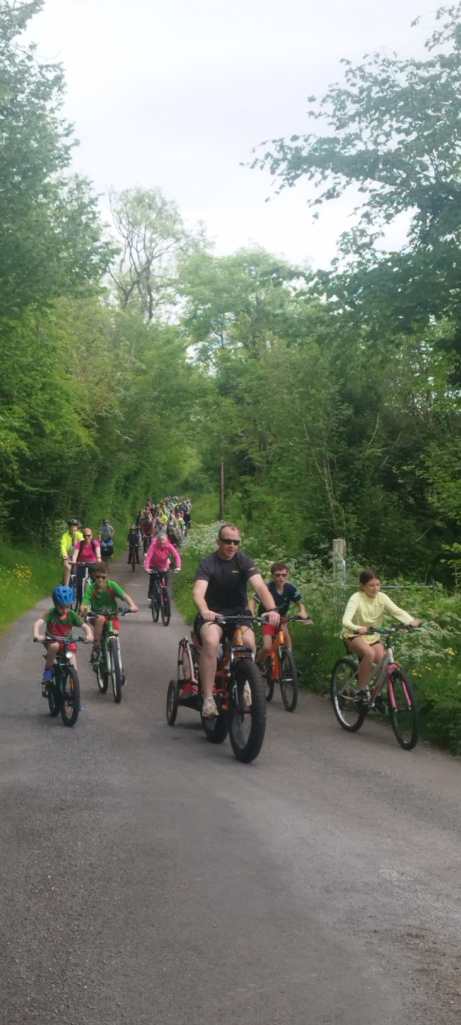
After the Community Cycle For All around the lake on the Saturday (and our biggest turnout yet!) – brilliantly organised by Eoin, led by James and stewarded by many other locals – we arrived at our picnic spot for sandwiches, crisps, fruit and water, all generously donated by Dessie of Gertie’s Canal Stop and Mel of Tailor McKeons and Leanna’s Lodge. And free ice-creams were handed out to all the kids thanks to a brilliant last minute organisation by April from Peas & Beans café.

It’s difficult to find the words to describe the welcoming community of Keshcarrigan or the fun we had cycling from camping spot to swim spot to festival event to another feast in the pubs and back again. 

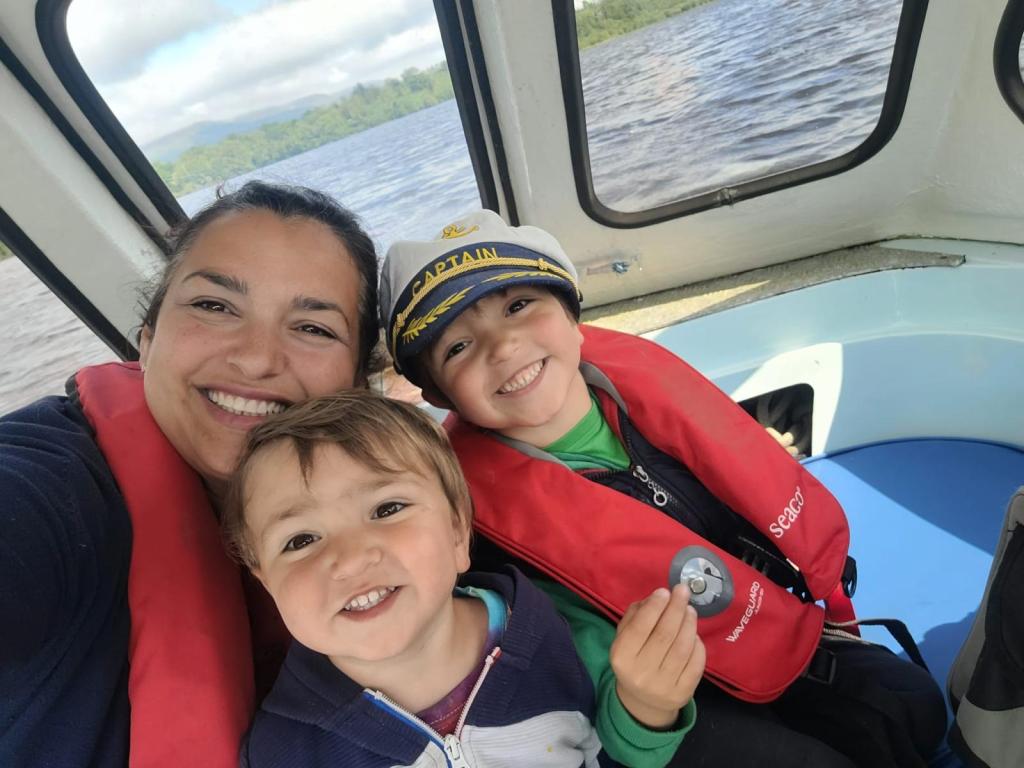
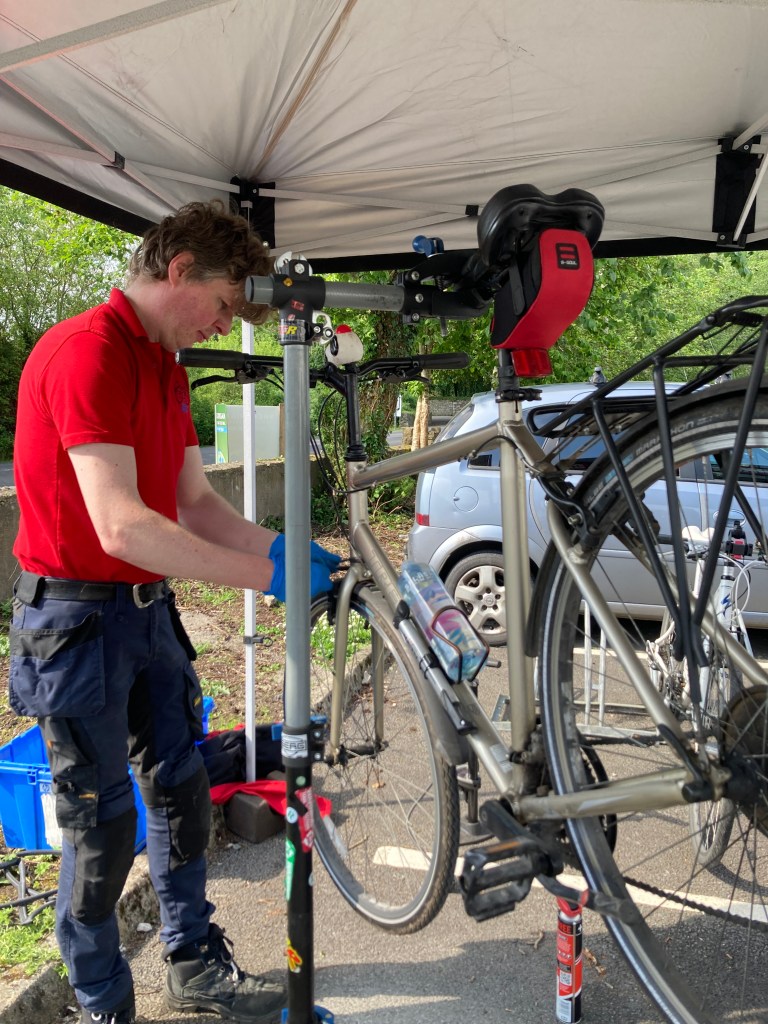
There were so many other parts to the festival too for which we are so grateful – the generosity of Dave Price who volunteered two full days of free boat tours on his Shannon Queen, Lough Allen Adventure Centre who ran free kayaking and stand-up paddle boarding, Tadhg Moran of Moran’s Bike Shop who volunteered again to run a Dr Bike session, the brilliance of the Gamesmaster challenges created by Jennie and Phil, the fun of the quiz written by Liam and Carmel and mce’d by Niall, Mat running the Cyclimpics and the Slow Bicycle Race, the willingness of Seamus Gibbons of Electric Bike Trails to literally go the extra mile so that one of the mums could take her little one on the community cycle, the quiet concentration as Duncan Warner of Nature Base in Galway, led a wonderful activity for kids and adults extracting natural dyes from buttercups, clovers and leaves, John the retired guard whizzing up and down on his electric bike to check everyone was happy, Hamish opening Gertie’s early for cups of tea, Tailor McKeons producing meals even when the kitchen was closed, the bicycles propped on every wall, the miles so many people travelled to join us… the list goes on and on.

As Sandra, a first-time festival goer from Dublin said ‘I will definitely be coming back to the festival and to Keshcarrigan. And telling my friends about this beautiful place!’

We definitely had the ‘smile factor’ that Paddy hoped for and as April said ‘the village was buzzing…what a lovely bunch of people…just phenomenal’

So next time you pass through a village like Keshcarrigan, stop and take some time to explore – on your bicycle if you can – you never know what hidden gems you might find!

Huge thanks as always to all of our generous sponsors and supporters – Leitrim Sports Partnership, Leitrim Tourism, Leitrim Country Council and the Irish Environmental Network.

We can do this!

At Velo-city[i], the international cycling conference, some years ago I tracked down speakers of many nations to quiz them about their rural roads – did theirs look like ours, did they have similar widths, volumes of traffics, speeds, could they help me demonstrate that the concept of ‘Rothar Roads’[ii] could work. The Swiss said no, the Austrians said no, the Slovenians said no, the French said no…and then I spoke to the Danish and they said yes! They said ‘we have roads like that and it works’ but then she laughed and said ‘but of course we have a different culture of driving in Denmark’.

As she saw it, that difference in driving culture was a fact.

And she’s right but maybe it doesn’t always have to be that way.

I went to a school where kids were regularly hit by teachers. Not so long ago you might have found yourself in a restaurant with people smoking at the next table. And driving home after a few too many drinks down the pub was the norm. All of these are almost unthinkable now.

Although there are some things that seem to be sewn into the fabric of our damp souls, we in Ireland do culture change well. That’s one of the strengths of this country. We are willing to learn new behaviours, adopt new attitudes, change our perspective.

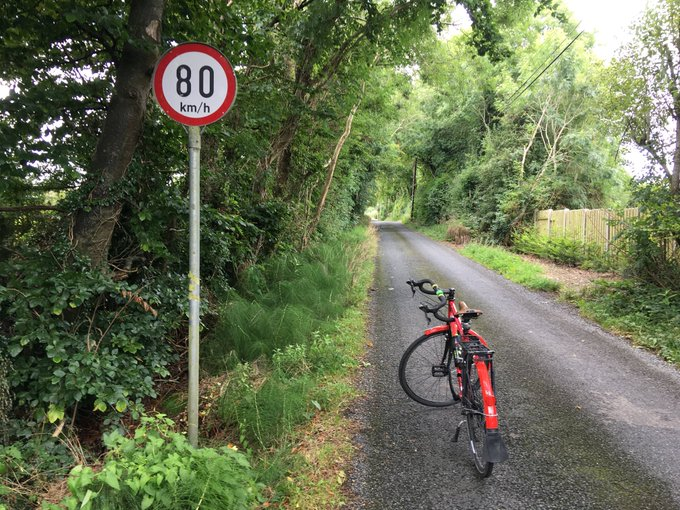
I have huge hopes for the reduction in speed limits on our urban areas and rural roads. We probably all instinctively know that 80kph is not the appropriate speed to travel on those narrow, bendy roads with limited visibility. We know this yet we are sometimes confused by the signs we see as we enter such a road environment – the 80kph speed limit standing proud. Somewhere in our brain we think maybe it is ok. Yet the collision rates and road death statistics tell a very different story. In 2022 73% of road fatalities occurred on a rural road[iii]. This is not acceptable. The numbers of road deaths in any rural or urban area are not acceptable.

The speed reductions are not the answer, of course. As with many complex problems there is no one answer. But this is one huge step towards creating a very different kind of public space.

Some years ago, as part of the ‘Vision for Cycling in Rural Ireland’[iv], the Rural Cycling Collective called for changes on our rural L roads, our “Rothar Roads” as we call them. We know that in many road and street environments we need new infrastructure to create safe, segregated spaces for people on bicycles. We also know that the creation of segregated spaces on our narrow rural roads is often not feasible. Yet we also know those same rural roads already create an almost perfect cycling network.

So often these L roads have low motor traffic volumes, have smooth running surfaces, are often lined with beautiful bio-diverse hedgerows and crucially already connect us to where we want to go. What makes them less than perfect is the culture of driving – inappropriate speeds, particularly on blind bends, overtaking without allowing for safe passing distances, driving with the assumption there will be no one else on the road.

The proposed speed reductions are, I believe, the start of a new culture of driving in Ireland. The start of the creation of an environment where people walking and cycling on our rural roads really are ‘expected and respected’.

And I say this, not just as an optimist but as someone who has observed so many changes in our culture over the years.

I know we can do this.


[i] https://ecf.com/projects/velo-city

[ii] Rothar-Roads_Discussion-Paper_April-2022_Cyclist.ie_040622-compressed.pdf

[iii] 13% rise in road deaths recorded in 2022 (rsa.ie)

[iv] What is Cyclist.ie’s Rural Vision? – Cyclist.ie – The Irish Cycling Advocacy Network

With thanks to Joan Swift, Sligo Cycling Campaign and Damien O’Tuama, Cyclist.ie National Cycling Coordinator for their inputs on an earlier draft.

Leitrim Cycling Festival 2023 – in my element?

As the festival started this year a friend said to me ‘you must be in your element now’.

As an introvert, being a festival organiser is definitely not me in my element which got me thinking about why I do what I do.

After moving back home to Leitrim in the summer of 2015 I felt very alone in my love for cycling and its potential to change lives in so many different ways.

Back in the UK my whole life had revolved around cycling – redesigning city streets for people on bikes during the day, cycle advocacy in the evenings and cycle touring with friends whenever I could in between. I was surrounded by people who ‘got’ cycling.

Convinced I wasn’t the only one in Leitrim, I selfishly started the festival to meet other people who ‘got’ cycling and hopefully along the way convince some more.

Seven years later my wish has absolutely come true.

I now have a rich, varied, inspiring, ever-growing community of wonderful people from across the country who also get cycling.

Our little festival continues to grow, people come back year after year, the kids get bigger, I learn more, I get inspired and re-inspired and we have a huge amount of fun along the way.

This year there were so many moments that almost brought tears to my eyes: Manon’s beautiful film on Friday night made me so proud to be part of women-led initiative and reminded me that I am a part of something so much bigger; watching little ones waiting patiently as their bikes were lovingly fixed by Tadhg of Moran’s Bike Shop and Phil; hearing the excitement of finding Fionn Rogan’s hidden haikus as we cycled to our picnic; the appreciation for the cheese feast donated by our lovely friends in Leitrim Hill Creamery; the queues for free ice-cream thanks to the Leitrim-West Cavan branch of DSI; the laughter of all who watched Jay Ryan’s amazing Flea Circus (I love how he demands children to use their imagination and hope he brings that joy far and wide); the quiet concentration as a missing link on the greenway got beautified with chalk; the seriousness with which grown ups took the slow bicycle race; the generosity of Simone (and the deliciousness of his pizzas); the wonder of Phil’s brilliantly devised Bicycle Race board game; the cycle to Fenagh through lush green; realising Yika had washed up again, the willingness of people (especially Mat) to take on any role required of them, no matter how last minute; the chats; the people…..all those people who ‘get’ cycling and get why coming together means so much.

Thank you all.

And a huge thanks to all the people in Ballinamore who helped make it happen – Jennie (who seemed to be able to be everywhere all at once, doing everything that needed doing), Phil (who quietly shared lots of his ideas and skills), Claire (who encouraged us to use the beautiful spaces in the Island Theatre and took charge of making feasts happen) and Kay (who knows everyone, talked to everyone that needed to be talked to and made sure we did things properly).

And thanks of course to my co-organiser Laura – my fellow introvert who definitely gets it. x

Once again Leitrim proves itself to be a cycling treasure

Just like in days gone by, bicycles could be spotted outside shops, cafes and pubs throughout Drumshanbo.

The festival was filled with the sounds of laughter, the crunching of gravel under spoked tyres, the squeaking of bicycle brakes, bells ringing, poetry, music and good conversation.’ said Jo Sachs-Eldridge, organiser Leitrim Cycling Festival.

Leitrim Cycling Festival 2022 brought people to Drumshanbo not just from Leitrim but from Donegal, Louth, Sligo, Galway, Roscommon and Dublin as well as other further flung places such as Germany, New Jersey and New Zealand. Some arrived on a whim, some on a recommendation, some returned with delight. Yet however they came they all enjoyed exploring Leitrim by bicycle and the magical programme of activities put together by the festival team.

Leitrim Cycling Festival is more than just a celebration of bicycles – it is a celebration of communities. As the festival grows each year, as people return, bringing friends and family with them, so the community grows.

At this year’s festival little ones learnt to cycle, some completed their biggest cycle yet, some rediscovered the joy of cycling, some shrieked while cycling the many crazy bikes on site, some discovered the 7km downhill from Bencroy and some took part in the art, poetry, puppetry, feasting, singing, dancing, ice baths and slow bicycle races.

The Leitrim Cycling Festival team worked closely with the community to bring together their fullest programme to date. Whether you were new to cycling or had been cycle commuting or cycle touring for years there really was something for everyone.

As part of BikeWeek, Leitrim Cycling Festival 2022 was supported by Leitrim County Council, Leitrim Sports Partnership and Leitrim Tourism.

The festival team would also like to thank all who contributed to the festival including Drumshanbo Tidy Towns, Moran’s Bike Shop, Trailblazers, Lough Allen Adventure, Electric Bike Trails, Eileen O’Toole, Wayne Frankham, Grainne McMenamin, Johnny Gogan, Fiona Heenan, Brían Farrell, Brendan Barry, Leitrim Branch of DSI, Scollan’s Gala, The Shed Distillery and all the people who helped out in a myriad of ways.

What I learnt in Kilty – Leitrim Cycling Festival 2021

I learnt that I will never win a slow bicycle race 
Or ride a penny farthing
And that cycling round and round 
a village roundabout is mesmerising

I learnt that a colourful friend 
is the key to colourful gear
And that for some, moving clouds
is something you can hear

I learnt you can take a line for a cycle
And that bikes are instruments too
And cycling up hill is not easy 
after two platefuls of stew

I learnt you can fit six people on a single bicycle
(according to the Rock)
And that wise men like Ken
know how to take a knock

I learnt that the Tottenham Estate 
cleverly grew within their grounds
pineapples and lemons
while famine raged all around

I learnt that the ‘nuachta’ of old was always the ‘buamai’ in Belfast

I learnt that the fiercest streets of Dublin 
are learning to care
and that within every community  
there are gardens to share

I learnt that when the measurements are wrong 
a curry feast can go on 
and on and on..

I learnt that ‘Kilty Live’ 
brought life to the street
and watched with glee as the Wandering Bandstand 
brought people to their feet

I learnt that the pub has only 24 pint glasses

I learnt that you can dance in the rain
with the Cosmos in an awning
and that sticks for the fire 
can be delivered at two in the morning

I learnt that Leitrim
is even more beautiful than I knew
And that Kilty can definitely 
teach me a thing or two

So thank you Kilty
From all of us cycling crew


Jo Sachs-Eldridge


A poem inspired by a wonderful weekend 
of playing, listening and gathering stories
 inspired by the 
Human-on-a-Bicycle Library project


Love your bike!

The bicycle is an object of love for so many reasons.

Are there many other items that were in everyday use a century ago and are equally so today? Can you think of a means of transport that is suitable for a three-year-old and a ninety-three-year-old, that is at home amid gleaming skyscrapers and rural Rothar Roads?  Is there another invention as versatile, convenient, space-saving, cheap to run, good for you and as gentle on the planet? Most of all is there another invention which is as much fun!

For the week that’s in it, when love is in the air, we want to pay homage to the love bicycle owners everywhere feel for their chariot by posting two poems on the theme of bicycles. We do this by kind permission of the author and poet, Bernadette McCarrick. The poems are taken from Bernadette’s most recent collection of poems “To Walk in My Native Place New and Selected Poems”

Bernadette is an award-winning poet, and this is her third collection. The other two were “My Fathers Barn” 2009 and “A Swan in Flight” 2015.  This latest book was completed in collaboration with her brother Pat McCarrick who took the photographs which accompany the poems. Pat is also Chairperson of Sligo Greenway Co-op.

We hope you will love the poems as much as we did and that you too might pen a poem to celebrate the love of your bike or share a photo of bikes being used and loved by you or previous generations.

Celebrate this Valentine’s Day with #LoveYourBike and #NowAndThen.

We look forward to seeing the love!

Learning to Cycle

Although it had been lowered

the saddle on my mother’s bike

was still a bit too high.

So, I stood on the pedals and pushed

took hold of handlebars with grips

for steering, for veering into grass

hoping for a softer place to fall.

My first trip was a hundred yards

of squeal and freewheel and after

ten or twelve of these

with all the balances achieved

the next run was a country mile

of triumph to the local shop

for liquorice and sugar barley.

My lap of honour took me

three miles down the road

and I was an eight-year old

arriving for the first time

on my own

at my grandfather’s house

where I was welcomed

with a silver coin, a trophy

better than Olympic gold.

Midsummer’s Day

On this hot midsummer’s day

here he comes again

the same man

who wheels his bike to town

the bike his prop

his beast of burden

for carrying his purchases

for leaning on

while he halts

where it’s cool

under the copper beech

while he stops

to chat to people

tending their gardens

while he takes

a break at Boyle Abbey

on the bridge

resting

one elbow on the saddle

before continuing on his way

breath by managed breath

back home.

Poems copyright: Bernadette McCarrick; Pat McCarrick (Photographs)

“To Walk in My Native Place New and Selected Poems”- published by Mayo Books, Castlebar Co Mayo, Ireland (www.mayobooks.ie) September 2020 and available to order from Mayo Books, Liber Sligo, Foxford Woollen Mills and Reading Room Carrick on Shannon.

Whose line is it anyway?

In this article, Jo Sachs-Eldridge from the Leitrim Cycling Festival and Cyclist.ie reflects on the importance of good design and how we might achieve it using the input of diverse voices. 

The announcement of additional funding to create almost 300 jobs in active travel is a very exciting step towards a more sustainably mobile Ireland – as we reported here . 

As the Minister for Transport notes ‘Developing high quality walking and cycling facilities will encourage more people to switch to active travel and will contribute to tackling climate change. Really good design is what is needed to connect communities and make walking and cycling attractive, safe and accessible to everyone.’

He is absolutely right we need really good design. But we also need to consider the questions of who determines whether this is really good design? Who gets to make those decisions? Who is involved in the whole process of design? Are everyone’s voices being heard – particularly those who may not traditionally engage in the process such as women, young people, people with disabilities and other people who may be even more significantly impacted by the quality of the infrastructure. 

As noted in the recent TII ‘’ report, ‘Travelling in a Woman’s Shoes’, “Transport is often seen as gender neutral, providing benefit to all equally. However a growing body of international research highlights that this is not the case. Women and men can have different needs, constraints and expectations for using transport”.

Really good design is often a highly complex process with no definitive right answer but lots of wrong answers. There is guidance out there, good guidance, but that doesn’t guarantee good design. We know that. So how do we now do things differently? 

My experience in Cardiff, where I previously managed the programme for cycling, is that engaging with the right people at the right time is key to good design. It sounds simple and in some ways it is. But to do it right requires a considerable amount of time and effort. Every aspect needs to be considered – the timing, the information, the audience, the wording, the method. But the time and effort invested will make a considerable difference to the result.  

Because good cycle design is all about lines. To start with are the desire lines of the people who live, shop, work, play, learn in a place. The desire lines matter but they are not the only ‘lines’ that need to be considered. 

We also need to think about the line taken on introducing innovative design; the line we take on deviating from the status quo; on reallocating road space; on removing parking spaces; on reducing the capacity of a junction for motorised private vehicles; on prioritising active travel road users over motorised traffic. 

And then there are all the detailed lines, the lines that can get so easily lost in translation – every millimetre of road space reallocated, every kerbline, every sign installed, every barrier is another decision. Another line.  

Who makes these decisions? 

Who draws these lines? 

There is a myriad of conflicting needs and wants and a myriad of potential decision makers. 

And there are no simple answers. 

The only way we get can this right, the only way we can overcome these conflicts and draw the best possible ‘lines’ is through engagement and collaboration with as many people as possible at every stage of the development. 

From my experience I would argue we need: 

  • strategic cycle network plans developed in collaboration with the people who matter and based on real desire lines; 
  • the integration of these network plans with all other relevant local area and national plans; 
  • routes that are designed based on best practice and through collaborative design workshops that involve all relevant parties – members, internal officers, external stakeholders – all with a clear understanding of the ambitions of the scheme;
  • community street audits or walk-throughs incorporated into the design process – for both internal officers and external stakeholders; 
  • simple audit tools to allow a broader and wider range of people to be involved in the process and to ensure that no aspect of high quality design is overlooked; 
  • effort made to ensure that voices from those harder to reach groups are heard – the right lines to be drawn by the right people at the right time.  

We know that designing for the expedient movement of car drivers no longer fits with our policies, our future plans, our targets, or our long term sustainability. 

Cycling benefits all of us regardless of who is doing the pedalling through the reduction in congestion, pollution, pressure on the health service and improved community cohesion. 

Key to developing a high quality cycle network that will have an impact on travel behaviour is the answer to the question ‘whose line is it anyway?’

In order to create quality networks that make cycling an attractive option we must make the time and effort to engage with everyone that matters.

As ultimately no one has a claim to the line.

It is all of ours. 

Photo credit: Luciana Prado

Have your say in the ‘Vision for Cycling in Rural Ireland’

As printed in the Leitrim Observer 26th August 2020

Over the last few months a new group has been established in Ireland – the Rural Cycling Collective.

This Collective is made up of members of cycling campaigns/clubs/festivals from all over the country and is part of Cyclist.ie, the well established national cycling advocacy group. The Collective was set up to give a voice to people who live and cycle outside of the cities and to rebalance the debate on active travel so more of those everyday journeys by bike and on foot across rural Ireland are enabled and supported.

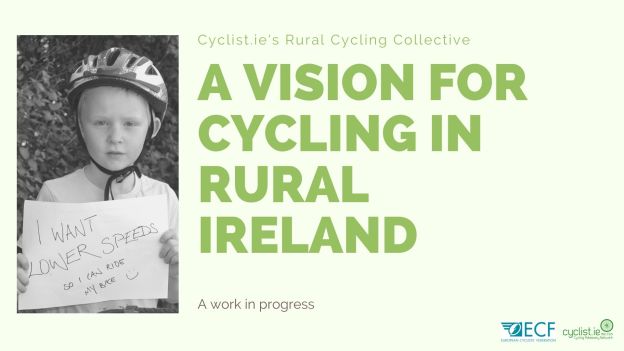
The Rural Cycling Collective’s first action was to produce a Vision document that encapsulates what they believe needs to happen to enable more people to cycle and walk more often.

Jo Sachs-Eldridge, organiser of Leitrim Cycling Festival, led the creation of the ‘Vision for Cycling in Rural Ireland’.

Jo is passionate about the group having a shared vision “From my experience in Wales as both a Transport Planner who specialised in walking and cycling and an active travel campaigner I felt it was hugely important for us to create this Vision so that we had a clear set of ‘asks’ and spoke with one voice.”

“It has been such a privilege to be part of such a positive, proactive group. The creation of our draft Vision for Cycling in Rural Ireland, has been a wonderful collaborative effort that has brought together those that have an intimate knowledge of every policy document related to cycling in Ireland, alongside those who have experience of cycling in rural Ireland and those who have big dreams of what we could do to make change happen.”

“The clearer we are about what we want the easier it will be for our representatives to make that happen, particularly now that there is so much more funding available for active travel.”

The Rural Cycling Collective are keen to get more people involved and for as many people as possible to have their say on the draft Vision before it is presented to the Dail in late September.

Jo added “We know that the strength of this Vision will come from the gathering of knowledge and ideas from everyone, not just those within the group but also those who have yet to get involved. That’s why we have published it as a draft so that others can help shape it before the final Vision is taken to our representatives. We want them to know that this is a truly collective vision.”

The draft Vision for Cycling in Rural Ireland has 8 priorities. It calls on Local and National Government to –

  •         Create an environment in our towns, villages, and rural roads where cyclists are expected and respected
  •         Create and map useful, connected cycle routes throughout Local Authority areas
  •         Implement best practice design so that routes are safe and comfortable for all ages and abilities
  •         Create safe cycle routes to school and car-free zones at school gates
  •         Lower Speed Limits to make our roads and streets safer and more accessible for everyone, and to reduce casualties
  •         Ensure clear and timely access to funding by improving capacity at all stages of local and national government
  •         Collaborate with all stakeholders including cycling and community groups at all stages of planning and design
  •         Provide Cycle Training for all ages especially children


‘A vision for cycling is a vision for the future’

Taken together these measures would transform active travel throughout Ireland. The co-benefits would include improvements to health, safety, congestion, air-quality, noise levels, and the public realm.  More cycling will also help us to meet our climate change obligations.

Leitrim Cycling Festival invites everyone – people who cycle, people who don’t cycle, want-to-be cyclists, mums, dads, planners, councillors, Ministers and An Taoiseach – to get involved in shaping this vision and helping to make it a reality.

To find out more, add your support, share your feedback go to http://cyclist.ie/ruralvision/

The start of a new rural Cycle Bus

As printed in the Leitrim Observer 26th August 2020.

Leitrim Cycling Festival’s small bike ride last Saturday may have seemed like an inauspicious event but it may just be the start of a small revolution. Thanks to the ‘Get to School on Your Own Fuel’ initiative being run by Cyclist.ie, the Irish Cycling Advocacy Network, groups all over the country have been taking part in practice runs to schools. The initiative is running from the 15th to the 28th August with events and a scavenger hunt competition to encourage families to practice their route before the schools start back.

Throughout the summer, children have been out cycling in their local neighbourhoods, going to parks, meeting friends, and enjoying the freedom and fresh air. With the return to classrooms in September, the advocacy groups want to highlight the opportunities for more children and students to cycle, walk, scoot or skate safely to school.

Key to getting more children to get back to school ‘on their own fuel’ is the familiarisation of routes from home to school.

Last Saturday 22nd August, Leitrim Cycling Festival in conjunction with parents from Cootehall National School including Emily from Artwood, Sarah from Donal Neary & Co. Accountants and Mo from Hullaballoo, organised a short bike ride from Cootehall Village to the school and back. Gerry from Trailblazers met them at the school where he gave a short workshop on how to carry out a simple m-check of your bike to make sure its road worthy before heading off on a ride.

As a result of the practice run two of the parents in Cootehall School will be starting a regular Friday morning bike ride to the school from the village. This means that an extra 5 children at least will be arriving at school having had a blast of fresh air and exercise to start the day. Studies have shown improvements in performance in school for those who cycle and the active start creates energy that helps concentration levels[i]. It also saves money, reduces congestion during the school drop-off, encourages independence and can be a lot of fun!

There are already active cycle buses in places like Galway, Limerick and Dublin. The idea is simple – a group of parents and children ride along a set route, at a set time with set pick up points, just like a bus. The number of parents required will depend on the size of the group and the complexity of the route but it is recommended that there be at least one parent front and back.

Mat Warren, of Leitrim Cycling Festival and a cycle trainer, will be on hand for the first cycle bus to Cootehall National School on Friday 4th September to help make sure the parents involved are comfortable leading the group.

If any parents in Cootehall National School would like to get involved or find out more about the Friday morning Cootehall Cycle Bus they can contact Christine or Emily.

Organiser of Leitrim Cycling Festival, Jo Sachs-Eldridge, said

“As someone whose day job used to be designing cycle routes, I’ve loved seeing so many more kids and families out on bikes this summer. We are so lucky to live in places where the roads are still relatively lightly trafficked and the distances between our schools, towns and villages mean that the bicycle can be a real alternative to the car.”

“This national campaign to ‘Get to School on Your Own Fuel’ is a fantastic initiative to give people the chance to practice their route to school before the September rush. It would be wonderful for more families to discover what might be possible. Even if they then only do it a few times a week, or even a few times a month, it all makes a difference.”

The network of cycling groups, of which Leitrim Cycling Festival is a member, are calling on schools to provide space for secure bicycle parking. They will be contacting all local authorities and the National Transport Authority with a request to support and fund this initiative where possible and are encouraging parents to do the same.

As set out in the Vision for Cycling in Rural Ireland (http://cyclist.ie/ruralvision/), cycling groups want to see all agencies and organisations remove barriers to cycling and walking by reducing speeds of car drivers, creating segregated routes where needed and installing other infrastructure to make walking and cycling an attractive, safe option. The groups will also be contacting all local authorities to ask that they implement as a matter of urgency 30 km/h speed limits in all urban areas especially around schools.

ENDS

REFERENCES / NOTES

Get to School on Your Own Fuel www.cyclist.ie/school

National Scavenger Hunt Competition  www.cyclist.ie/school

A Vision for Cycling in Rural Ireland. https://cyclist.ie/ruralvision/


[i] https://www.edu-quip.co.uk/blog/4-benefits-of-cycling-to-school-and-why-we-should-all-get-involved


The Rural Cycling Collective and why its worth shouting about it!

In recent months I have had the absolute privilege of being part of an exciting new group of groups – the Rural Cycling Collective. This Collective is made up of members of cycling campaigns/clubs/festivals from all over the country and is part of Cyclist.ie, the well established national cycling advocacy group. The Collective was set up to give a voice to people who live and cycle outside of the cities.

And it turns out there are lots of people cycling for everyday journeys all over rural Ireland. And not only are there lots of people cycling but they are also really passionate about making change happen to enable more people to cycle to work, to school, to the shops, to visit friends, to do all of those everyday journeys by bike (and on foot) wherever possible.

Why is it worth shouting about this group?

Not only because it gives a much needed voice to those who traditionally haven’t been heard but because of the nature of the group itself.  Why?

  • The Collective focuses on strengths. As a collective we bring many different skills, knowledge and expertise to the table. The group has started from a place of strength by asking everyone to share what they can bring so we can immediately make use of all of those skills and all of that knowledge in all that we do.
  • The Collective is open to new ideas. The group was created to fill a gap – a voice for cycling in rural areas – but did not have a fixed idea of what exactly that might look like.  This ability to create a space and allow the strategy to emerge has already enabled lots of wonderful ideas to come to the fore, ideas that may never have been shared if the group started with a fixed agenda.
  • The Collective is positive. So often campaigners can get so caught up in campaigning against things that sometimes they can lose sight of what they are campaigning for. This Collective has started by creating a positive vision of what we want and what we think needs to happen to get us there. This vision will give a coherency to our group and a focus for future actions. Find our more here – A vision for cycling in rural Ireland.
  • The Collective works collaboratively. Thanks to the wonders of modern technology and the nature of our group our first action, the creation of our Vision, has been a wonderful collaborative effort that has brought together those that have an intimate knowledge of every policy document related to cycling in Ireland alongside those who have experience of cycling in rural Ireland and those who have big dreams of what we could do to make change happen.
  • The Collective is based on the power of collective intelligence. Similar to the previous point the group knows that its power will come from the gathering of knowledge from everyone, not just those within the group but also those who have yet to get involved.  For this reason  we are publishing our Vision document as a draft as we want other people to also have an opportunity help shape the vision and get involved in making it a reality.
  • The Collective is hugely action focused. Thanks to the leadership the group is high energy and highly action focused. This is definitely not a talking shop, this is a group that’s moving fast!

As a former transport planner and now a life coach I am incredibly excited by the potential of this Collective. It feels like a wonderful combination of planning alongside a strengths-focused, action-focused, future-focused group. That focus on strengths, action and the future is at the core of coaching and is something I know will help us have an impact.

If you would like to get involved give us a shout – we would love to hear from you!

You can contact me on jsachseldridge@gmail.com or get in touch with the group via https://cyclist.ie/contact-us/